Thursday, November 12, 2020

2020 Teacher Hustle

Writing and blogging is something that I have enjoyed for.... decades.  Middle school I used "clearlyconfused12" on open diary.  Then there was xanga, myspace, and facebook notes. But I have been using blogger for several years now. But something that is always evident. I write when I am passionate about something. 


Through the years the other obvious thing about my writing is that I had to be inspired and have time. 

This time it's not that I lack content. 
This time it's not that I am missing passion. 

This time it's the fact that I do not feel like I have time to blog regularly.  

I am exhausted. I am tired. I am hustling. 

Every day there is new information, challenges, issues, or long list of tasks to tackle. But we survive. 

We hustle. 

The last few weeks I have been exploring more information about being culturally relevant in my teaching as well as developing positive relationships with students. It has been wonderful information and great reminders. 

But I keep coming back to the fact that I can't do everything as well as I'd like, or as well as I use to....because of time. 

So, we hustle. 

I like to build relationships with my students every year. But this season is so different. Before , I wouldn't stress about helping a student, but now I to have to make sure masks are up, temperatures are taken, and desk are cleaned (just to name a few).

Hustle. 

How am I supposed to develop relationships when students are in quarantine or are just anxious in general.
      I need more time.  

Hustle. 

It's not fair to the students. It's not fair to the teachers.  

On top of all of the new procedures, hurdles, list and risk, we have been facing a political season. This only heightened the anxiety and caused division for some. Politics only added a layer of confusion. 

And what did I do. I kept showing students love and compassion, grace and mercy. 

And as I try to keep calm, be a safe place, they don't see....

my hustle. 

Students coming into classes with 3/4 of a year prior, and major digression is a challenge. Hopping from one need to another, switch tasking as fast as I can write the thought on a sticky note. Remembering to email one parent, call another, get a translator for a conference. 

Hustle. 

This last semester has been one for the books. I love my students just like I have any other year. We still crack jokes, get treats, discover their mathematical abilities. I am still told sad stories, tough truths, and worry about them as if they were my own children. 

Hustling....
    anyone else this tired? 

I just need more time.


Wednesday, October 7, 2020

Graphic Novels more than cartoons

Graphic novels have been rapidly becoming a beloved piece of literature for students of all ages.  And if you don't believe me, read one for yourself.  Here is a link that you can find several highly recommended books if you are a more visual person, this site not only has good information, but at the bottom as several suggestions. 

Wait.. there is more!!   If you'd like a list of books that shine light into the social distance world, check this list out here

Whether you fall in love with the art work, the speed or ease of reading, or maybe the control of reading a graphic novel, many people are learning to enjoy graphic novels. Students, English Language Learners and of all abilities, find them enjoyable and manageable. Graphic novels encourage readers not just in their literacy skills, but also in developing their creative skills. 

Before reading any graphic novels, I personally was a person who thought that they were childish, not "actually" reading, or a waste of time. But once I read my first graphic novel, "American Born Chinese" a couple of years ago, I instantly fell in love with their appeal and content. 


Recently I read another interesting graphic novel, "Lowriders in Space" with my 8 year old. It wasn't my favorite read of the semester, but I believe that it was because it was predictable and not of my interest or taste. 

Lowriders in Space would be a good book to use with elementary to middle school students. After reading it, I would have a groups of students work together to write and illustrate a 4 page short graphic novel that tells a story of perseverance and goals. If older students, I would then have them switch stories and have them write a different ending.

As an educator, you might be more interested in further reading. 
Graphic novels in the classroom - a roundtable
Teaching Strategies
Graphic novels and ELL students

Sunday, September 20, 2020

Happy Hispanic Heritage Month

 Good evening friends! 
Last night I submitted a major assignment. It was not something that challenged me mentally, but it was rather time consuming. I am proud of this project for the fact that I was able to complete it. It was interesting doing research on different authors and finding activities for people to do. Over all this is something that I can work on and continue to improve over the years, the challenge was the fact that it took a lot of time. I think next time, or before using this project, I will find better community options. Not living in the community, and during covid, I want to find events that can be celebrated during Hispanic Heritage Month. 

Check out the Hispanic heritage month activity here.

Sunday, August 23, 2020

Teaching in 2020

 https://amomwhotries.blogspot.com/2020/08/teaching-in-2020.html

I wrote the above on my personal blog; however, because it focuses on teaching I thought I'd share it here as well. 

Tuesday, July 14, 2020

Summer Projects {Design and Production for Instructional Materials}

My first project for my summer course was to learn about and create a presentation over a topic of my choice. I chose to write about (I)nclusion. Let me know your thoughts in the comments below: 
https://prezi.com/v/qfxngriquhzo/20presentationinclusion/?preview=1

The second project I have completed was to produce a short tutorial video. I have enjoyed chalkboard art for a while and wanted to encourage people to learn the art of lettering.  
https://youtu.be/qgxviFVT3rg or my other blog has images http://amomwhotries.blogspot.com/2020/06/i-tried-chalking.html

Credit: Megan Jones


Monday, July 13, 2020

Skittles Investigation {Final Project 805}

Here I will be posting my final project. Please let me know if you have any questions! 

Credit: commons.wikimedia.org

https://drive.google.com/file/d/1Z_Wtuh4mriUB0BAWp36ssvlCp6CN3E-P/view?usp=sharing

Skittles Statistics Investigation by Megan JonesCC BY-NC 4.0 

Sunday, July 12, 2020

Design in the Classroom

Artist, Designer, Educator, Creator, Presenter. Which of the previous terms does not belong with the others? 

NONE. 

That's right, it was a trick question. As a teacher I am often assumed to be the "type A" person, or someone who is organized, stiffed, or boring. However, even though I might be an overachiever and go-getter, I also have to be flexible, adaptable and creative to meet the needs of all of my students. Quick to differentiate is incredibly important and analogies become my second language. 

As a teacher I have to think like a designer. The world, now more than ever, is judged by appearance. Aesthetics are incredibly important. From the length of a parent email, to my 'agenda' on the white board. Everything needs to be pleasing to the eye. Knowing this helps me design a room that helps students engage not just with their environment, but also with the content. 

As a future Librarian, I will need to remember the key points of presentation and video design to help me meet my daily tasks. From creating an inviting environment, to presenting to staff or parents, to the possibility of needing video lessons, design is a skill that every Librarian needs to develop. 

And never stop growing. 

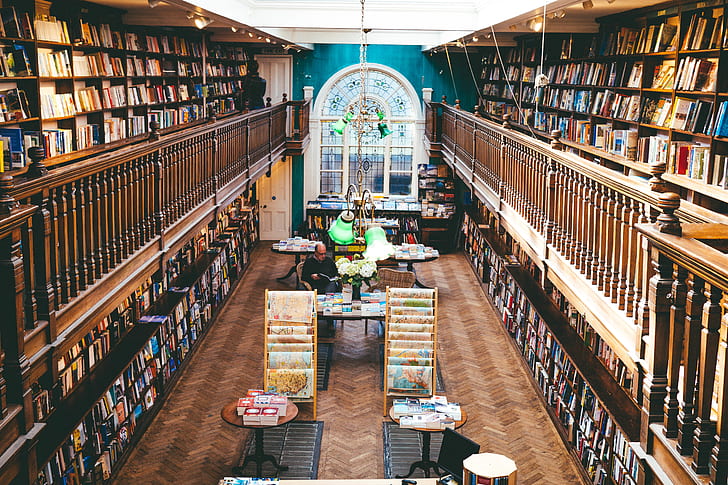
Top view photography of library | free photos | UIHere
Credit: UIHere

Book Blurb {I Lived on Butterfly Hill}

I Lived on Butterfly Hill
By: Marjorie Agosin
Illustrated: Lee White


This book, was long and I can see that it might be intimidating to young readers. There were sketches/pictures on a few pages, but the length was still a lot to consume. It was almost as if reading three stories in one book. 

Celeste Marconi is a young girl living in Chile around the 1970 (I had to look this up for the book does not reference a date, that I remember).  Her parents are doctors and working in serving the poorest Chileans. Celeste is an only child but lives with her Abuela as well as her Nana who is the nanny that took care of her mom as well. Abuela is a Jewish refugee from World War II, while Nana is a natural healing lovely lady who takes care of the house but is part of the family. 

Celeste loves school and her friends, but when their President, a great caring man, is killed and the government is ran by a dictator Celeste's parents have to go into hiding. Celeste's Abuela ends up sending Celeste to live with her Aunt (Tia) in Maine. She lives in a small place called, Juliette Cove, for 2 years. She has never spoken English in her life. But working for a year with her Korean friend, Kim, she learns to speak English. She is in Main for 2 years when she hears that the dictator has been overthrown and she goes back to Butterfly Hill, Valparaiso, Chile. 

When she returns to her home (although she found home in Maine), she is sadden by not being united with her Parents who are still in hiding. Her friend, Cristobal, helps her go up the coast in search for her father and her mother comes home later. 

A new President is elected in their country (their first woman), and Celeste wins a writing contest and the president is impressed and selects her writing as the winner. Celeste, wants to exchange her prize to make a library for others. A traveling library. 

As Celeste grew from a young girl into a young lady her heart grew as well. From seeing her parent's poorest clients (freezing babies feet), to being judged and the punch line for bullies in Maine, to isolation from culture shock, to her country suffering, burning books and her heart growing for the love people in writing. You watch her transform (like a butterfly) through the book. 

Although the book is long, it covers three to four years,  where many MAJOR events take place. I highly recommend this book. 

Once you read this book, please read "Refugee" by Alan Gratz! 

******
After I posted this blog I realized I had a specific form to fill out, so I'm just going to post that here too! It is a checklist so I am going to use it as such.

Title: I Lived on Butterfly Hill
Author/Illutrator: Marjorie Agosin and Illustrated: Lee White

Does the story:
Relate to children’s interests? ✅ Historical fiction - young adults
Provide various conflicts for readers to explore? ✅ yes, facing change and destruction of country and relationships as well as poverty
Provide age-appropriate content? ✅ very select audience
Encourage discussions/conversations? 
Distort history? No, in fact I had to look up the history, I had no idea! 
Comments/Insights: See above. Seriously a cute story.

Do the characters:
Represent a variety of people within cultural groups, age ranges and sizes and disabilities? YESSSSS. Chile has such a fast group of people! 
Are the “good” characters a reflection of a variety of backgrounds? ✅ Yes!! Jewish, Hispanic, American, Native
Include females as well as males in leadership and/or non-traditional roles? ✅ yes!! First female president.
Represent diverse people at the same “level” of the white characters? Yes, very much so! 
Are all characters depicted realistically and genuinely? Yes, the trip to find her father was a tad fetched. But maybe in the 70's teenagers just went around looking for parents. 

Tend to be depicted as stereotypical? 
Comments/Insights: 

Does the theme:
Offer readers a variety of things to think about, question, and consider? 
Explore, instead of preach, values? 
Include lessons from which readers can learn? 
Tell the story of a diverse population in a condescending manner, whether contemporary or in the past? 
Comments/Insights: It would most definitely provide a discussion!

Does the story’s setting:
Reflect a variety of places and spaces?  Many places, Chile and united states mainly. 
Represent urban, suburban, and rural settings realistically? both. 
Represent cultural settings realistically?  I think so. 
Comments/Insights:

Do the story illustrations (if there are any): 
Include representation of diverse populations? I didn't honestly pay attention to the sketch, few. 
Contain diversity represented within cultural groups? They are black and white sketches. 
Include characters depicted realistically and genuinely?
Avoid reinforcing societal stereotypes?
Comments/Insights:

Book as a Whole 

Would you be embarrassed to read the book to children of a different culture, and their parents? No, I think anyone and everyone should or could read this book. 
What is the author’s background for writing the book?  was raised in Chile by Jewish parents, so yes, she would have background knowledge to write this book. 
What is the context of the book?

Thursday, June 25, 2020

A favorite place - using images


Source: Wikimedia Commons
Title:James River State Park, August 2016 

This is not a professional image, but it is also not mine. However, it is extremely close to what my favorite place is. A picnic table, in shade, beside a river. 

Growing up I lived in a wood/farmland type place. There was a river near a walking trail that I would often retreat to in high school. I would park my truck and sit on the table over looking the slow moving water. I have written poetry, held deep conversations, crafted dreams and shed tears beside this river. No matter how old I get, or the location of raising my family, I will always feel at home... at peace... beside a river.  

I love to travel and be adventurous, and one day may live in a big city. But my heart comes a live when I am around nature. I serve and love a might creator and just bask in the majestic of God's greatest creation. The detail and simple yet complicated of it all, is something that has captured my attention for years. 

Wednesday, June 17, 2020

Reflection for Building Bridges

The past few weeks our cohort has been exploring vision and mission statements for schools. Honestly, prior to this course, I never put too much thought into vision/mission statements. I would look at a school's prior to an interview to learn their culture and vocabulary; but they were never studied much as professionals. 

Two things really stood out to me as we did this study.
1) There are bad mission statements out there. I thought schools would all use good examples, but there are truly some statements that are sad and make me, now, question the state of the education provided through them. 

2) How important wording is! I have learned in my adult years that there is power in words. One word that stood out to me the most, enough to talk to my husband about it, was the word 'citizen.' I am going to teach students regardless, if they are a United States Citizen or not ..... so, stating in a mission statement "digital citizen" might be off putting, or out of reach to some. Just a thought worth exploring. 

Glasses on a book image - Free stock photo - Public Domain photo ...
credit: goodfreephotos.com

Book Blurb {Blanca & Roja}

Blanca & Roja
By: Anna-Marie McLemore


I don't even really know what to say about this book.... 'eh.... It was not my favorite of the literature provided by the program. I enjoyed it, but at the same time, not really.  I am not for sure if it was the overly flowery (trying too hard) language. I often found myself skipping over the redundant description words. We get that Barclay's eyes are blue AND brown... like mud and water... like.. like... 

Now, when I read the authors notes and over all message behind the book made me enjoy it a little bit more. She wanted to tie in folklore into finding beauty and self identity. But the four main characters, which all tell the story, so you are constantly changing point of view (and they are short chapters), but the characters are also changing into animals or even claiming other gender identities (changing the pronouns). It was just a lot to keep track and at times, unnecessary.  

The two main girls, sisters, are following the family curse when one of the daughters becomes a swan. But then they meet a boy that was a bear who has difficult family situations (and his grandmother who is more like a dude, is now living with his best friends' grandma....) and the bear/boy's best friend was at one point a cygnet but then was also non-binary/transgender. Both girls were to fall in love.... well have the boy/bear fall in love with them.... SPOILER... one sister falls in love with cygnet/they/them/their. Both girls turn into swans, but make the swans mad so they then become human (mid-flight) and get hurt and one girl then becomes part of earth.... or something. This is all happening while the boy/bear is discovering family secrets. 

Again, the story is told from 4 perspectives. And each perspective changes form at least once if not more. 

It was a lot. 

The author is actually married to a tran/non man. Which I think it's cool to introduce characters. But I also feel like mixing it (gender identity) with folklore and shape shifting almost makes the characters less believable (of course you can be anything you want in a fairy tale). 

******
After I posted this blog I realized I had a specific form to fill out, so I'm just going to post that here too! It is a checklist so I am going to use it as such.

Title: Blanca and Roja
Author/Illutrator: Anna-Marie McLemore

Does the story:
Relate to children’s interests? ✅ It's a very niche market.
Provide various conflicts for readers to explore? ✅ yes, but some are not relatable... most
Provide age-appropriate content? ✅ very select audience
Encourage discussions/conversations? 
Distort history? maybe folklore
Comments/Insights: See above. Seriously a cute story.

Do the characters:
Represent a variety of people within cultural groups, age ranges and sizes and disabilities? Sure, they are changing characters, regularly.
Are the “good” characters a reflection of a variety of backgrounds? ✅ I mean, they are Hispanic
Include females as well as males in leadership and/or non-traditional roles? ✅ yes... and animals....
Represent diverse people at the same “level” of the white characters? they make the Hispanic girls almost seem "witch" like
Are all characters depicted realistically and genuinely? I mean... it's foklore....

Tend to be depicted as stereotypical? 
Comments/Insights: 

Does the theme:
Offer readers a variety of things to think about, question, and consider? 
Explore, instead of preach, values? 
Include lessons from which readers can learn? 
Tell the story of a diverse population in a condescending manner, whether contemporary or in the past? 
Comments/Insights: It would most definitely provide a discussion!

Does the story’s setting:
Reflect a variety of places and spaces? 
Represent urban, suburban, and rural settings realistically? universes!!
Represent cultural settings realistically?  I think so. Most kiddos don't know what it's like to go to a school where students WANT to learn. 
Comments/Insights:

Do the story illustrations (if there are any): 
Include representation of diverse populations?
Contain diversity represented within cultural groups?
Include characters depicted realistically and genuinely?
Avoid reinforcing societal stereotypes?
Comments/Insights: not present

Book as a Whole 

Would you be embarrassed to read the book to children of a different culture, and their parents? Almost embarrassed to read to parents.
What is the author’s background for writing the book? Married to a trans/non man. Hispanic herself and wanted to bring folklore to life.
What is the context of the book?
Comments/Insights:

Personal Insights

Your personal notes/insights about the book not covered in the previous sections: See blog! 

Friday, June 12, 2020

Thursday, April 30, 2020

Technology and Apps

I get overwhelmed easily - even more so when I am not in control.

So in order to 'gain some sense of control' I am compiling a list of the technology apps I have seen or personally used.  Some apps are more practical for different grade levels or content.

Have Used:
Quizlet
Quizizz
Kahoot    (see link)
Polleverywhere
Socrative
Photomath
Google Forms
Websites: Khanacademy, MyWhyU videos,

To investigate:
Google Drawings (LiveBoard vs Explain Everything)


WeVideo**
ELLevation **
Google Translate or TalkingPoints
ReadWorks.org
ALEKS/IXL **
Prezi - Padlet
SeeSaw
Hello English Kids
Book Creator Tool
Flipgrid
NewsELA (possibly **)
Picture a Day by Hello Literacy **
Peardeck
Soundtrap
GooseChase EDU (scavenger hunt)
Vocaroo (voice recording app)
Microsoft Teams and Google Docs

** are apps that require a purchase or subscription


Skills! {Mathematical Mindset}


Almost two years ago, while teaching at a BIG school, I did some professional development (book club style) by reading "Mathematical Mindsets" by Dr. Jo Boaler.

Although it was a very deep read (she was beyond thorough with her data, discoveries, and opinions). It was a great read. I often found myself copying, making post it notes, AND using some of the ideas from the book....which as an educator is a big deal, we often hear a lot of great ideas, but are not practical to implement.

As I implemented the idea to my students that mistakes are welcomed, it really affirmed a lot of my own personal and professional teaching style and philosophy.

One of the main figures she used in her book has always stuck with me. I got tired of trying to locate it on the webbs and decided to post it here (see above). 

I decided I wanted to do more search and found this article which has a more up to date version of the skills Fortune 500 companies find important.

Keep thinking! Keep communicating! Keep learning!

Book Blurb {Sal and Gabi Break the Universe}

Sal and Gabi Break the Universe
By: Carlos Hernandez


This was such an adorable read. I was a little worried at first (judging a book by it's cover) that I would find this book to be silly, not relatable, childish. But I found it the exact opposite! Cuban American, Sal, is a 13 year old boy who's lost his mother. He is also able to jump into different universes. He's starting a new school in Miami, where he meets Gabi who is impressed and curious about Sal's magic and science.

Their journey has so much depth. Their friendship grows as they learn to love their families through hardship and loss. Learn to take care of friends who are struggling.

The book offers themes of grace, compassion, patients, love, kindness, curiosity. Did I mention that the school the kids go to is a magnet school for artist! Made my heart jump with joy.

Although the science fiction part seems far fetched it is told through the lens of a middle school kiddo (so easy to understand).

This book made me smile and laugh. This book helped me learn more about Mami's and their important to their Hispanic Families.

I can not wait for my oldest son to read this book in a few years!  PLUS there is a second book coming out in a few days!

******
After I posted this blog I realized I had a specific form to fill out, so I'm just going to post that here too! It is a checklist so I am going to use it as such.

Title: Sal and Gab Break the Universe
Author/Illutrator: Carlos Hernandez

Does the story:
Relate to children’s interests? ✅ I think it's great to have science fiction meet Hispanic culture! 
Provide various conflicts for readers to explore? ✅ absolutely! What would you do facing a bully with these powers? 
Provide age-appropriate content? ✅ a little younger than "young adult" - super sweet
Encourage discussions/conversations? 
Distort history? maybe science...
Comments/Insights: See above. Seriously a cute story.

Do the characters:
Represent a variety of people within cultural groups, age ranges and sizes and disabilities? 
Are the “good” characters a reflection of a variety of backgrounds? ✅ I mean, they are Hispanic
Include females as well as males in leadership and/or non-traditional roles? ✅ love the female "dad" and Gabi!!
Represent diverse people at the same “level” of the white characters?
Are all characters depicted realistically and genuinely? 

Tend to be depicted as stereotypical? I wish I had more insight to the Hispanic culture.
Comments/Insights: 

Does the theme:
Offer readers a variety of things to think about, question, and consider? 
Explore, instead of preach, values? 
Include lessons from which readers can learn? 
Tell the story of a diverse population in a condescending manner, whether contemporary or in the past? 
Comments/Insights: It would most definitely provide a discussion!

Does the story’s setting:
Reflect a variety of places and spaces? 
Represent urban, suburban, and rural settings realistically? universes!!
Represent cultural settings realistically?  I think so. Most kiddos don't know what it's like to go to a school where students WANT to learn. 
Comments/Insights:

Do the story illustrations (if there are any): 
Include representation of diverse populations?
Contain diversity represented within cultural groups?
Include characters depicted realistically and genuinely?
Avoid reinforcing societal stereotypes?
Comments/Insights: not present

Book as a Whole 

Would you be embarrassed to read the book to children of a different culture, and their parents?
What is the author’s background for writing the book? Their first book, inspired by his own family I believe. 
What is the context of the book?
Comments/Insights:


Personal Insights

Your personal notes/insights about the book not covered in the previous sections: See blog! 


Sunday, April 26, 2020

Book Blurb {Enrique's Journey}

Enrique's Journey
By: Sonia Nazario


Goodness gracious! Enrique's Journey was .... a lot. I can't even find the words to adequately describe it.  If you want more information or follow up on the family, check out this site: http://enriquesjourney.com/

Author and journalist Sonia Nazario was moved when she heard of the heroic stories that many Latino teenagers take to seek their mothers in the United States.  She decided to follow and interview Enrique closely through his journey from Hondoras to USA. The book is a true story and account of Enrique's journey to be with his mom, Lourdes.

Although the book was very eye opening, my only complaint was that the repetitive nature of the writing was unnecessary and exhausting to read.  I understand that Sonia was trying to make a point for readers to grasp the harsh dangers that these children face (beating, robbed, raped, starving conditions, etc...) but by the 30th time it was stated in the same manner, she wasn't painting a bigger picture, but tracing over the same line... over and over again.

Enrique's story was very informative to the Central American culture. From drug use, young love, mothers leaving, harsh living conditions and helped me understand that Central American Hispanics are not welcomed in Mexico (what an assumption that I had wrong). 

The book also helped walk through the reasons, logic, and problems of oppression within political systems. Gang violence alone would make me want to flee my country as well.

I feel like anyone who is in favor of building a border, or wants to send every immigrant "back to where they come from" should read this book; hoping that it would soften their heart.

Overall, a great read and appreciate the insight to a terrible situation.  Modern day underground railroad.

******
After I posted this blog I realized I had a specific form to fill out, so I'm just going to post that here too! It is a checklist so I am going to use it as such.

Title: Enrique's Journey
Author/Illutrator: Sonia Nazario

Does the story:
Relate to children’s interests? ✅ maybe interest those who have similar experiences or hear of stories in their families. 
Provide various conflicts for readers to explore? ✅ would you risk your life to see your mother? 
Provide age-appropriate content? ✅ this book is the adapted for young people - I wonder how much different or detailed the original is.
Encourage discussions/conversations? 
Distort history? I don't think so....
Comments/Insights: See above.... could be shortened/more direct.  I got lost in some areas as it jumped back and forth. Written by a journalist (short columns, pushed together...)

Do the characters:
Represent a variety of people within cultural groups, age ranges and sizes and disabilities? 
Are the “good” characters a reflection of a variety of backgrounds? 
Include females as well as males in leadership and/or non-traditional roles? 
Represent diverse people at the same “level” of the white characters?
Are all characters depicted realistically and genuinely? 

Tend to be depicted as stereotypical? I feel like there is a stereotypical state being discussed through the narrative. 
Comments/Insights: 

Does the theme:
Offer readers a variety of things to think about, question, and consider? 
Explore, instead of preach, values? 
Include lessons from which readers can learn? 
Tell the story of a diverse population in a condescending manner, whether contemporary or in the past? 
Comments/Insights: It would most definitely provide a discussion!

Does the story’s setting:
Reflect a variety of places and spaces? 
Represent urban, suburban, and rural settings realistically? in unlivable conditions.
Represent cultural settings realistically?  I think so. 
Comments/Insights:

Do the story illustrations (if there are any): 
Include representation of diverse populations?
Contain diversity represented within cultural groups?
Include characters depicted realistically and genuinely?
Avoid reinforcing societal stereotypes?
Comments/Insights: not present

Book as a Whole 

Would you be embarrassed to read the book to children of a different culture, and their parents?
What is the author’s background for writing the book? Their first book, inspired by his own family I believe. 
What is the context of the book?
Comments/Insights:


Personal Insights

Your personal notes/insights about the book not covered in the previous sections: See blog! 


Wednesday, April 15, 2020

Book Blurb {The Poet X}

The Poet X
By: Elizabeth Acevedo

I absolutely adored this book. Talking to a middle school reading teacher, I told her I wasn't for sure who (which student) I would recommend this book to. It just had some adult moments, sadly, moments that my high school students have experienced.

A young Hispanic New York girl is learning how find her voice. The book is written in verse and her perspective. She has faced oppression, judgement, sexual assault, heartache, and questions her faith. The book walks you through a school year that she faces many hurdles.  She has a twin (who's perfect) but she soon discovers that he is also facing his own difficulties. Their mother was going to be a nun, but was "sold" to their father (who lusted after all women) to make a better life.

It's a book of hope. It has your jaw drop at times. It makes you applaud the teenagers and cry for them too. Joy is seen for her teacher's relentless ability to help X!

A coming of age story that can be related to.  It might be one of my new favorites (makes me think of "Perks of Being a Wallflower").
******
Title: The Poet X
Author/Illutrator: Elizabeth Acevedo

Does the story:
Relate to children’s interests? It is for young adult, not children. Mature content.
Provide various conflicts for readers to explore? ✅ 
Provide age-appropriate content? ✅ teens (although I enjoyed it)
Encourage discussions/conversations? 
Distort history?  It doesn't reflect on history. Would love to hear her mom's story. 
Comments/Insights: It is an incredibly quick read, and the verse is not difficult to follow. Journal entry style making it appeal to maybe not strong readers. 

Do the characters:
Represent a variety of people within cultural groups, age ranges and sizes and disabilities? 
Are the “good” characters a reflection of a variety of backgrounds? ✅ 
Include females as well as males in leadership and/or non-traditional roles? ✅ X is very strong! 
Represent diverse people at the same “level” of the white characters?
Are all characters depicted realistically and genuinely? 

Tend to be depicted as stereotypical? Maybe a little with the Catholic momma... but maybe some stereotypes are true?
Comments/Insights: A story of redemption. 

Does the theme:
Offer readers a variety of things to think about, question, and consider? 
Explore, instead of preach, values? 
Include lessons from which readers can learn? 
Tell the story of a diverse population in a condescending manner, whether contemporary or in the past? 
Comments/Insights: It would most definitely provide a discussion! See questions in back of book for more guidance.

Does the story’s setting:
Reflect a variety of places and spaces? 
Represent urban, suburban, and rural settings realistically? Urban, takes place in NYC
Represent cultural settings realistically? 
Comments/Insights: Very modern and having been to NYC I could picture their story unfolding. 

Do the story illustrations (if there are any): 
Include representation of diverse populations?
Contain diversity represented within cultural groups?
Include characters depicted realistically and genuinely?
Avoid reinforcing societal stereotypes?
Comments/Insights: not present

Book as a Whole 

Would you be embarrassed to read the book to children of a different culture, and their parents?
What is the author’s background for writing the book? Their first book and is a child of DR immigrants. 
What is the context of the book?
Comments/Insights:


Personal Insights

Your personal notes/insights about the book not covered in the previous sections: See blog! 


Saturday, April 11, 2020

Book Blurb {Before We Were Free}

Before We Were Free
By: Julia Alvarez

What a beautiful story to read. It was very interesting to read during our current situation (Covid Crisis) for there were moments that paralleled between this story and today.

The story focuses on a family living in the beautiful Dominican Republic during the 1960's and their dictator, "El Jefe". The book is from the view of a young teenage girl. It is a lovely combination of growing up, family dynamics, politics and war.

The author, Julia, grew up in the Dominican during this time and remembers how important it is to share the story. Although the book is not a biography, she shares that several of the events that took place also happened in her real life.

The author does state that a lot of Latin countries have experienced power-hungry dictators and similar events with trying to over throw the government. When the family flees to NYC for safety, it made me have a great appreciation for living here. Although not always pleased with the president, I am thankful that he's not a dictator and someone new can come along.

The book also made me realize how little I know about other countries and wish I could know it all.  The book is short, fast paced and from the perspective of a teenager.  Great read and highly recommend.

PS - One of my favorite characters was Chucha and if anything you should read the book to find out why!

******
Title: Before We Were Free
Author/Illutrator: Julia Alvarez

Does the story:
Relate to children’s interests? ✅
Provide various conflicts for readers to explore? ✅ 
Provide age-appropriate content? ✅ for pre-teens and teens (although I enjoyed it)
Encourage discussions/conversations? 
Distort history?  
Comments/Insights: The story is captivating and fast paced! It is based around historical events but it is not a biography. Written from the perspective a teen girl in the 1960's. 

Do the characters:
Represent a variety of people within cultural groups, age ranges and sizes and disabilities? 
Are the “good” characters a reflection of a variety of backgrounds? (American, Italians, the Embassy).
Include females as well as males in leadership and/or non-traditional roles? ✅ (her mother is helping!)
Represent diverse people at the same “level” of the white characters?
Are all characters depicted realistically and genuinely? 

Tend to be depicted as stereotypical?
Comments/Insights: The characters are well thought out. Focuses on a family and their close friends.

Does the theme:
Offer readers a variety of things to think about, question, and consider? 
Explore, instead of preach, values? 
Include lessons from which readers can learn? 
Tell the story of a diverse population in a condescending manner, whether contemporary or in the past? 
Comments/Insights: It would most definitely provide a discussion! See questions in back of book for more guidance.

Does the story’s setting:
Reflect a variety of places and spaces? 
Represent urban, suburban, and rural settings realistically? 
Represent cultural settings realistically? 
Comments/Insights: Very accurate I felt, the author lived this and I'd imagine she would be able to share her experience well. 

Do the story illustrations (if there are any): 
Include representation of diverse populations?
Contain diversity represented within cultural groups?
Include characters depicted realistically and genuinely?
Avoid reinforcing societal stereotypes?
Comments/Insights: not present

Book as a Whole 

Would you be embarrassed to read the book to children of a different culture, and their parents?
What is the author’s background for writing the book? Their first book, inspired by his own family I believe. 
What is the context of the book?
Comments/Insights:


Personal Insights

Your personal notes/insights about the book not covered in the previous sections: See blog! 


Saturday, March 21, 2020

Book Blurb {Charlie Hernandez & The League of Shadows}

Charlie Hernandez & The League of Shadows
By: Ryan Calejo


WOW! I just finished this book, and so thankful to see that the author, Ryan, didn't just leave me with a cliff hanger, but the second book is out... well, in September of this year!

The book does not waste time and jumps right into Charlie's world(s). He is a middle school boy (12) who recently 'misplaced' his parents and no longer has a home.... it burnt to the ground. Thankfully he is adopted by a wonderful old 'lady'!

Early on in the story his body starts change, and not just in the teenage boy type of way. We are talking horns, feathers, lobster claw.... and the only person who finds out about his 'disorder' is a classmate, Violet.

Violet is the perfect match for Charlie. She should work for the FBI. Not only does she track Charlie to his first destination, but under pressure (even in cave mines around strange folklore creatures) she can remember facts and ask the most targeting questions a 12 year old could think of.

The book follows Charlie and Violet as they investigate the world in which they thought they lived in. Charlie is blessed with Hispanic legends his beloved Abuela passed to him to help fill the gaps the Violet can't uncover.

The face several epic battles throughout the book, until their final scene (which I won't share).

Thankfully, about half way through the book I discovered that there is a glossary of creatures in the back. I could not keep pace or accurately picture all of the different legends. I am not for sure if it was my lack of Spanish speaking skills, or the quick changes from one world to another, but I had to reread several parts of the book to make sure I was on the correct page.

Overall I would recommend this book to teenagers, specially Hispanic teenagers.  Depending on the kid, some would get lost in the folklore while others would find it wildly fascinating (like Greek mythology).

Let me know what you think!

******
After I posted this blog I realized I had a specific form to fill out, so I'm just going to post that here too! It is a checklist so I am going to use it as such.

Title: Charlie Hernandez and the League of Shadows
Author/Illutrator: Ryan Calejo

Does the story:
Relate to children’s interests? ✅
Provide various conflicts for readers to explore? ✅ SO MANY (almost unrealistic)
Provide age-appropriate content? ✅ for pre-teens and teens (although I enjoyed it)
Encourage discussions/conversations? 
Distort history?  I am not familiar with Latin culture and folklore, so I am not one to say. 
Comments/Insights: The story is captivating and fast paced!

Do the characters:
Represent a variety of people within cultural groups, age ranges and sizes and disabilities? 
Are the “good” characters a reflection of a variety of backgrounds? 
Include females as well as males in leadership and/or non-traditional roles? 
Represent diverse people at the same “level” of the white characters?
Are all characters depicted realistically and genuinely? 

Tend to be depicted as stereotypical?
Comments/Insights: The two main characters are balanced.  Male/Female, Hispanic/Not, Non-Social/Social, Basic Student/Academic nut

Does the theme:
Offer readers a variety of things to think about, question, and consider? 
Explore, instead of preach, values? 
Include lessons from which readers can learn? 
Tell the story of a diverse population in a condescending manner, whether contemporary or in the past? 
Comments/Insights: It would most definitely provide a discussion!

Does the story’s setting:
Reflect a variety of places and spaces? 
Represent urban, suburban, and rural settings realistically? "underworlds" where do myths live?
Represent cultural settings realistically? 
Comments/Insights:

Do the story illustrations (if there are any): 
Include representation of diverse populations?
Contain diversity represented within cultural groups?
Include characters depicted realistically and genuinely?
Avoid reinforcing societal stereotypes?
Comments/Insights: not present

Book as a Whole 

Would you be embarrassed to read the book to children of a different culture, and their parents?
What is the author’s background for writing the book? Their first book, inspired by his own family I believe. 
What is the context of the book?
Comments/Insights:


Personal Insights

Your personal notes/insights about the book not covered in the previous sections: See blog!